




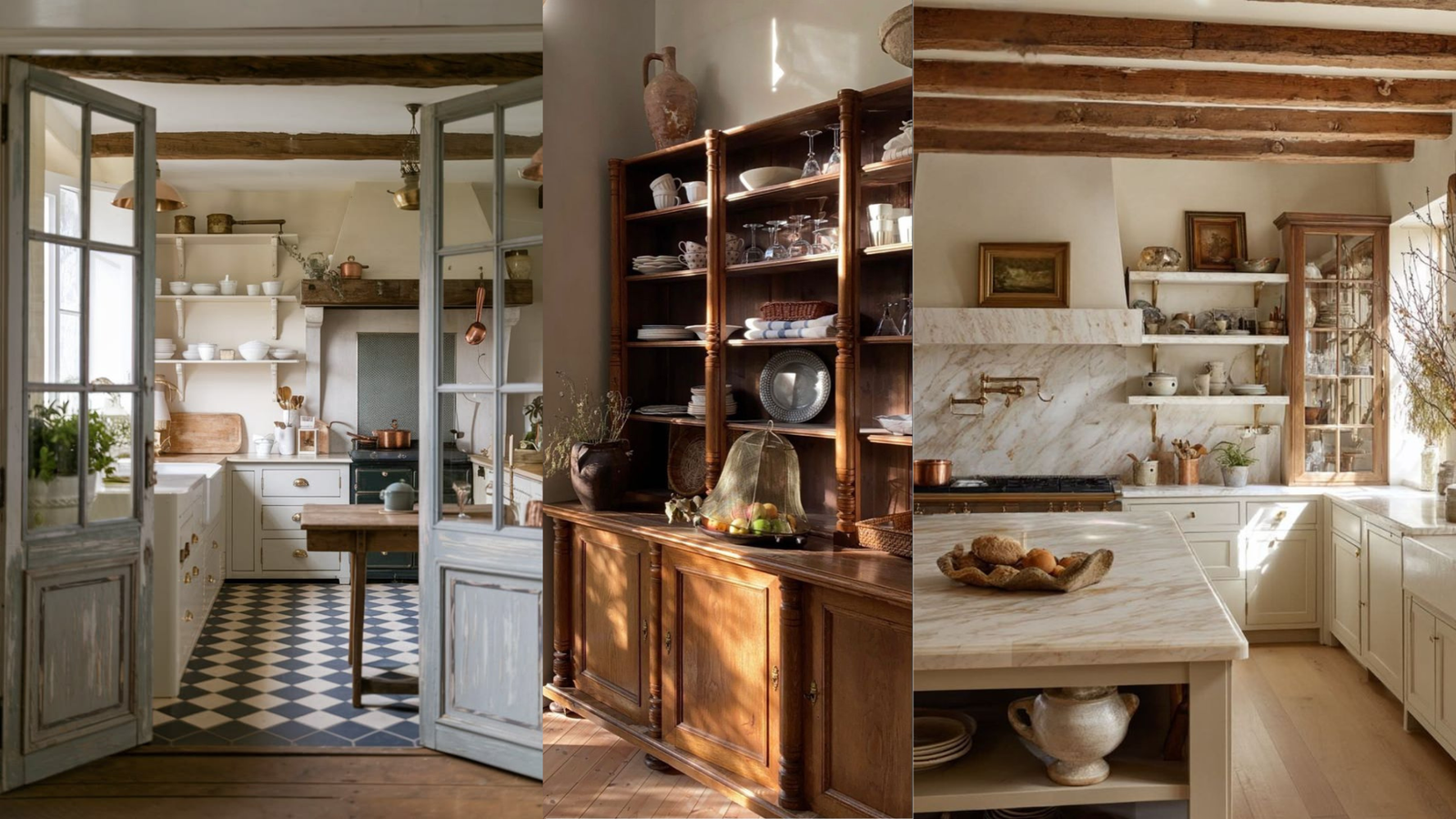

The kitchen gets used every day. It's the first room you walk into in the morning and the last one you leave at night. It sees more of your actual life than any other room in the house.

And somehow it's the room we forget to make beautiful.
We spend weeks researching appliances, then furnish it with whatever's left over. A cutting board. A shelf. A stool that technically fits. The kitchen ends up practical rather than intentional — and that's a shame, because it's one of the best rooms for antiques.
Here's why: antiques were made to be used. A French dough bowl wasn't decorative — it was working equipment. Ironstone wasn't collected — it was on the table. A farmhouse table wasn't chosen for its aesthetic — it was built for the center of the room. These pieces already know what a kitchen is for. That knowledge shows in how they look, how they sit, how they age.
This spring, we built the Kitchen Collection specifically for this: antiques that belong where you cook.
Here's what we chose, and how to use them.
FRENCH DOUGH BOWLS

These were working objects — hand-carved from a single piece of wood, shaped over years of use, worn in all the right places. They're beautiful on a counter with lemons stacked inside, anchoring a kitchen island, or holding mail by the back door. The size matters: a large bowl commands a space the way a small one can't.
How to spot a genuine one: look for hand-carved asymmetry and naturally developed patina — darker in the recesses, lighter on the high-contact rim. Uniform stain is not the real thing.
Styling note: Fill it. A dough bowl sitting empty loses half its purpose — and all of its warmth.
IRONSTONE
 Nothing arranges itself like ironstone. The cream-white tones, the subtle variation piece to piece, the way it stacks — it was made for open shelves. Build the collection slowly: a pitcher, a platter, a crock, a compote. Mix periods and shapes freely. The beauty is in the grouping, not in matching a set.
Styling note: Vary the heights. Lean a platter, stack two plates, let a tall pitcher anchor the back. Let it breathe.
COPPER
 Well-patinated copper reads as warmth, history, and intention all at once. It doesn't matter whether it's hung on a wall or sitting on a shelf — copper earns its place in a kitchen the same way it did in European farmhouse kitchens for centuries.
The key word is patina. An over-polished copper piece looks decorative. A piece with its natural darkened surface looks like it belongs.
Styling note: Don't clean it aggressively. The green-to-brown spectrum of natural patina is the point.
FARMHOUSE TABLE
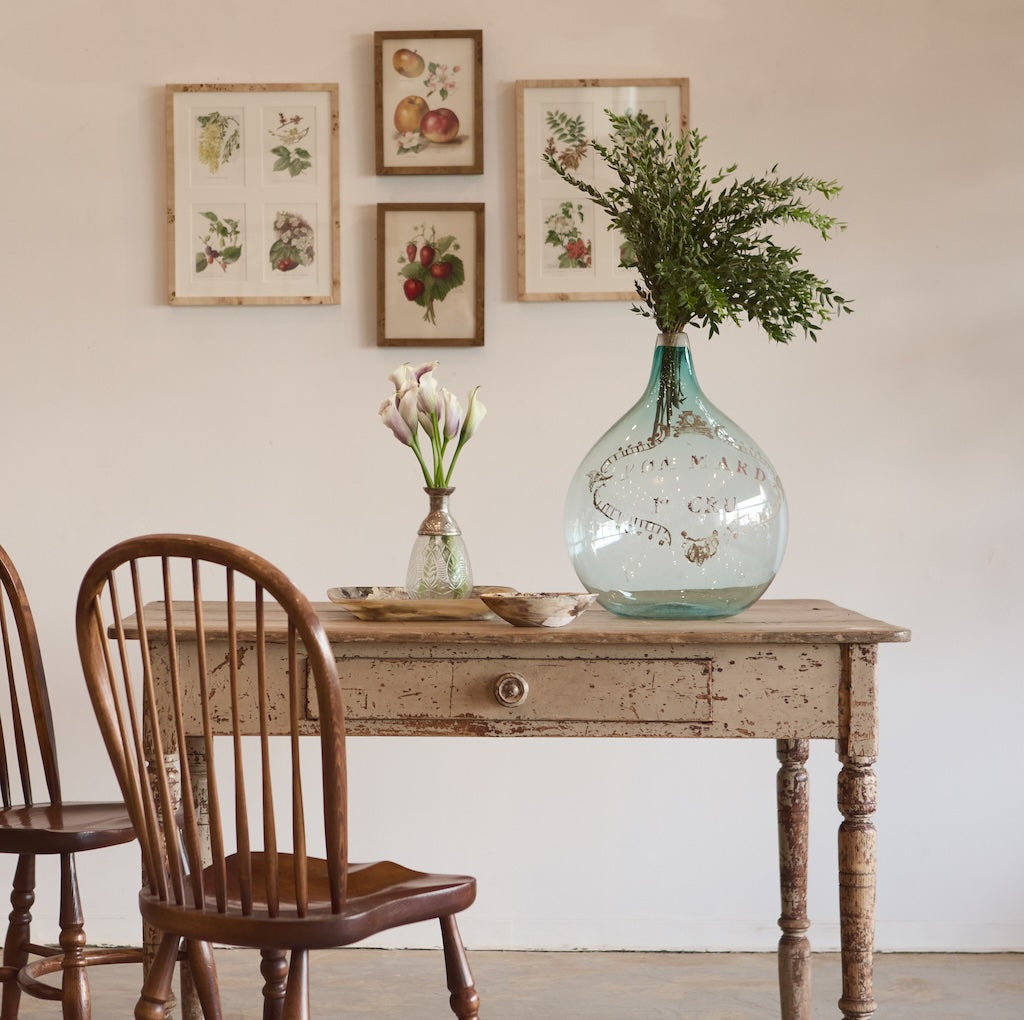
 A large, worn farmhouse table changes a kitchen — not as a statement piece, but as the room's emotional anchor. French pine or oak, circa 1880–1920, with original construction and honest wear. These are built to live another hundred years.
Use it as a workspace. As a gathering point. As the thing that makes the kitchen a room instead of a corridor.
Styling note: Use it for everything. A table that gets used ages in a way that looks completely different from one that's been carefully preserved.
ANTIQUE CUTTING BOARDS

The real ones thick French bread boards, hand-carved, weathered from actual use — are entirely different from decorative reproductions. Use them propped against a backsplash, layered on a counter, or in an actual bread basket. They work.
Styling note: Layer three different sizes together. The scale variation tells you something was collected, not purchased as a set.
THE RULE I ALWAYS COME BACK TO

A kitchen should feel discovered rather than decorated. Like it came together over time, through choices that meant something not through a single Saturday at a big-box store.
That's what antiques do in a kitchen. They bring the history the room was always missing.



Leave a comment (all fields required)